
Can Your Home Fix Your Focus?
Brooke Cleaver May 7, 2026
Scatterbrained. Lethargic. Forgetful. Whatever you might call it, something is robbing us of our focus.
In fact, dear reader, I have a rare, fourth-wall-shattering confession to make. Just starting this article took me far longer than it probably should have. And while a large part of that may be due to the fact that I’m a pining perfectionist who agonizes over every word, an even greater (and equally frustrating) part of it might have to do with the realization that I just can’t seem to think like I used to.
Moments that were once filled with silence, monotony, and, dare I say, boredom have since given way to endless bouts of doom scrolling, multitasking, and news updates.
Sound familiar? If so, you’re in good company. According to Gloria Mark, Chancellor’s professor of informatics at the University of California, Irvine, our collective attention spans are going down. But thanks to some creative design solutions, there might be a way to help counter that.
The Long-Term Effects of Technology and Digital Media
Over the better part of the last two decades, Mark and her colleagues have studied the effects of technology on our lives and how common tools like email, Microsoft, and the Internet impact our moods, attention spans, and multitasking abilities. By following office workers, college students, and software developers, Mark has found that our attention spans have dropped drastically over the last two decades. In a 2004 study of office workers, Mark found that the average person spent less than 2.5 minutes on a task before switching to another. In a 2014 study on college students, that number dropped to 47.9 seconds.
 However, this stark drop in concentration may have more to do with what we’re consuming than how we’re consuming it. A systematic review on social media use revealed that compulsive habits, such as instinctively picking up your phone and doom scrolling for hours on end, were linked to higher rates of depression, anxiety, and trouble sleeping. Similarly, with the advent of artificial intelligence and language models like Claude, ChatGPT, and Gemini, studies have shown that we may be trading in key decision-making functions relating to judgment for the sake of productivity.
How The Home Can Save the Mind
Now, is all of this to say that we’re doomed. Finished. Finito? No, dear reader. In fact, I would argue the opposite. But it’s not going to be easy—which is kind of the point. Thanks to Kathryn Jezer-Morton, a columnist for The Cut, the world is embracing a new phenomenon called friction-maxxing: the art of introducing more friction, or minor inconveniences, to your life in order to restore meaning.
And no, this doesn’t mean picking a fight with your neighbor. Instead, think of it as putting your life on “hard mode” by relying less on technology. Think about it. There’s a lot that we used to do that we simply don’t, all because it’s easier not to. Why talk to a friend when you can text them? Why wander the grocery store when curbside pickup is just around the corner? Who needs to make dinner, anyway, when you can simply DoorDash it? No walking. No talking. No problems.
Except for one. While all of these modern conveniences are nice, they’re teaching us to become intolerant of our real lives. As Jezer-Morton so eloquently puts it, “Once we’ve adopted a habit of escaping from something, whether it’s Uber-ing dinner five nights a week or using AI for replying to texts, the act of return, which is how we might describe no longer using a tool of escape, feels full of irritating friction.” In other words, it’s teaching us that thinking, being, and doing are nuisances that should be avoided, when in all reality, those are the things that make life worth living.
The goal isn’t to cut down on screen time, or to remove technology from our world completely (at this point, that would be impossible), but to lean into life’s burdens, learn to enjoy them, and make our actual lives feel more compelling than our phones.
And one of the easiest ways to start is by focusing on the home. Let’s face it, when it comes to our day-to-day, there’s a lot we can’t control, but the home is not one of them, which is why several designers and homeowners have started working on innovative solutions to add more friction to the home.
The Right Kind of Smart
After nearly two decades of the “smart home”, many designers are rethinking what it means to be smart. According to Julia Cancilla, social media and news editor at Elle Décor, anti-smart homes “have become one of the most requested features among high-end designers’ clients.” For many, the desire to pull away directly coincides with the return of the “dumb phone”: the longing to disconnect. In cases such as these, it’s easy to see the appeal of the anti-smart home. But I would argue that there’s room for a more nuanced approach; one that doesn’t outright ban all smart tech, just the right kind.
One study, conducted at the Osaka Metropolitan University in Japan, found that some smart home tools, like motorized window treatments, can help to improve our overall sense of well-being. In their experiment, participants who were slowly subjected to natural light, via motorized shades, 20 minutes before waking, experienced lowered levels of sleepiness (both subjective and objective), and better feelings of rest. So, in some instances, one could argue that smart tech has the potential to improve our lives.
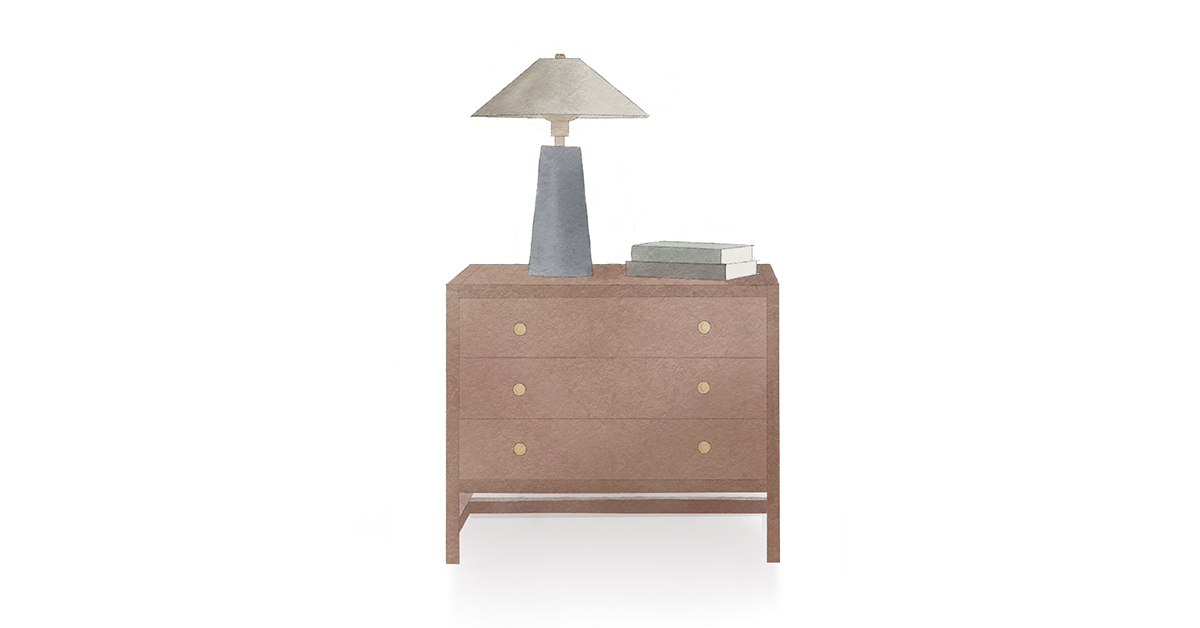
The kind of technology that I would advocate cutting is the kind that takes away from our lives: the kind that distracts us, stifles us, and removes us from moments of intentionality. And one of the ways in which designers are doing so is through custom furniture. According to a study published by the University of Southern Maine, just the mere sight of a phone can be enough to distract us. Even if you have your phone facing away from you, just having it in your line of sight increases the likelihood you’ll pick it up. Custom furniture, specifically designed to store and charge technology, can help to combat these deeply ingrained impulses so that we can remain in the here and now.
Tactile Reminders
However, one of the most effective ways to live more intentionally is through tactile reminders. Swapping some of your smart tech with tactile, analog reminders not only affords you the possibility of living more in the moment, but it also provides you with an excellent opportunity to decorate and personalize your home.
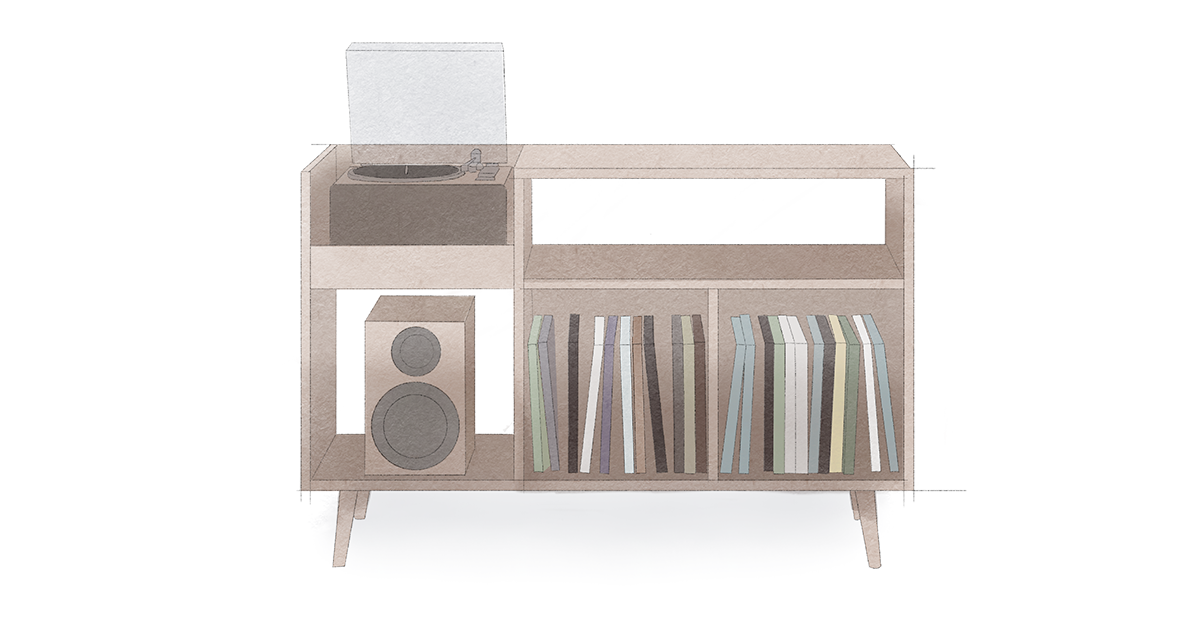
For instance, instead of relying on a Bluetooth or smart speaker for music, try incorporating a record player with vinyl. Think about it. It forces you to stop, browse, and truly think about your choice before acting; it’s one heck of a conversation starter; and it turns something as simple as listening to music into a ritual. Small swaps, such as these, allow you to be more present and intentional with your choices, while also infusing your space with physical reminders of who you are and what you like.
 There’s a kind of power in the choices that we make. Sometimes, the act of touching something, doing something, or simply choosing something gives us a sense of ownership over our lives; ownership that is so often robbed by the wrong kinds of tech. As stated earlier, the goal isn’t to remove technology from our world completely: just the kinds that steal from us.
Design You Can Participate In
Finally, one of the easiest ways to add a little more friction to the home is by choosing pieces that ask more of you, not in a bad way, but in the best way possible.
More often than not, we want fast answers with even faster results. Why would you spend weeks, or even months, looking for the perfect accent piece when you can do a quick Google search and throw something in your cart? Well, dear reader, one could argue that doing so robs you of the same thing a DoorDash or grocery delivery does: experience.
When it comes to the home, the path of least resistance can often leave you with rooms that age faster than raw milk. There’s a reason the pieces we feel most connected to are rarely the ones we bought in a rush. More often than not, they’re the ones we searched for or built. Whether it be antiquing, thrifting, or working with someone to create a custom piece, these experiences ask more of us. But that’s also what makes them more memorable.
They turn you from a passive consumer into an active participant. And when you’ve had a hand in shaping the things that fill your home, the end result will often be more personal, more impactful, and more rewarding.
Final Thoughts
What design decisions have you implemented to fix your focus? We’d love to hear from you. Join us on Facebook, Instagram, and LinkedIn to continue the discussion.
Lafayette Interior Fashions is a family-owned, to-the-trade manufacturer of blinds, shades, draperies, and other custom-crafted interior fashion products. To learn more about our products, find a local dealer near you.
